Balinese: The Elegant Script Font for Romantic Design
In the world of typography, few fonts evoke a specific emotion as immediately as a beautiful script. Among these, Balinese stands out as a particularly stylish and incredibly elegant choice. Its flowing characters and graceful curves offer a visual language of sophistication and romance, making it an instant asset for any project that requires a touch of beauty and grace. This article explores the Balinese font, diving into its characteristics, its ideal applications, and how to evaluate whether it's the right choice for your creative or professional needs.
What Makes Balinese Unique?
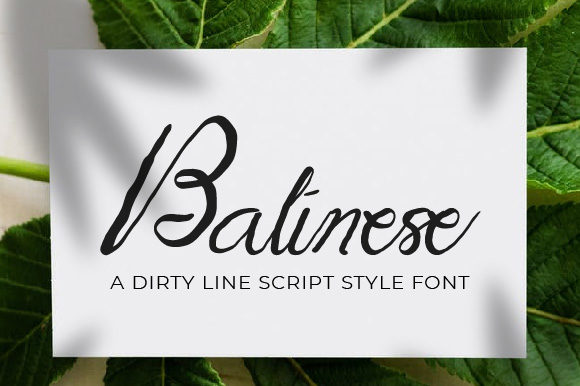
Unlike many modern, minimalist fonts, Balinese is designed with a distinct ornamental quality. It belongs to the category of script fonts, which mimic the fluidity of handwritten calligraphy. However, Balinese achieves this with a refined consistency that makes it perfect for digital and print design. Its letters are crafted with elegant swashes, gentle connections, and a balanced rhythm that gives text a cohesive, luxurious look. The font doesn’t shout; it whispers with confidence and style.
The key characteristics of Balinese can be summarized as follows:
- Romantic Aesthetic: Every curve and line is designed to convey beauty, making it inherently suitable for themes of love, celebration, and personal connection.
- High Elegance: It carries a formal yet approachable elegance, similar to that found in high-end stationery or classic literature.
- Excellent Legibility: Despite its decorative nature, Balinese maintains clear readability, especially at larger sizes or for shorter text blocks.
- Stylish Versatility: It can adapt from purely traditional contexts to more contemporary designs where a hint of classic flair is desired.
The Core Purpose and Value of Balinese
The primary purpose of the Balinese font is to elevate design through emotional resonance. Its value lies not in being a utilitarian typeface for body text, but in its ability to set a tone and create an experience. When you see text rendered in Balinese, you instantly perceive care, attention, and a sense of occasion. This makes it a powerful tool for branding and communication where establishing an emotional connection with the audience is paramount.
Where Balinese Shines: Real-World Applications
The practical applications for Balinese are as varied as the needs of creators and businesses. Its strength is in adding a romantic or refined touch to key elements of a design.
For Personal and Celebratory Projects
This is where Balinese truly feels at home. Its elegance is a perfect match for the significance of special events.
- Wedding Invitations: The font can transform a simple invite into a work of art, setting a tone of romance and sophistication for the entire event.
- Thank You Cards & Greeting Cards: A personal message written in Balinese feels more heartfelt and considered, adding weight to sentiments of gratitude or celebration.
- Quotes and Art Prints: For displaying a favorite poem, a meaningful quote, or a piece of inspirational text, Balinese frames the words with visual beauty that enhances their impact.
For Professional and Branding Use
Beyond personal use, Balinese can be a strategic choice for businesses whose brand identity aligns with qualities of luxury, care, or personal touch.
- Logos: For a boutique, a wedding planner, a florist, a bespoke jewelry brand, or a cozy café, a logo incorporating Balinese can communicate elegance and a customer-focused approach instantly.
- Business Cards: A business card using Balinese for the name or title stands out, suggesting professionalism with a personal, artisanal quality.
- Branding Elements: It can be used sparingly on packaging, website headers, or promotional materials for brands that want to highlight a romantic, elegant, or crafted aspect of their story.
Imagine a small bakery using Balinese for its logo and the names of its signature pastries on the menu. It immediately suggests handmade, delicate, and special products. Conversely, a tech startup would likely find Balinese unsuitable, as it conveys an emotion incongruent with innovation and speed.
Evaluating Balinese for Your Project
Choosing any font is a decision about communication. Before committing to Balinese, consider your project's goals and practical constraints.
Strengths and Ideal Scenarios
Balinese is an excellent choice when:
- The primary goal is to evoke romance, elegance, tradition, or personal sentiment.
- The text it will display is short and impactful—like a name, a title, a headline, or a single phrase.
- The design medium supports high-quality reproduction (good paper stock, high-resolution screens) to maintain the font's intricate detail.
- Your brand or project identity aligns with qualities of beauty, craftsmanship, or celebration.
Considerations and Limitations
To use Balinese effectively, one must also understand its limitations.
- Not for Long Body Text: Using Balinese for paragraphs of text would be challenging to read and visually overwhelming. It is designed for display purposes.
- Context is Key: Its romantic style might feel inappropriate or jarring in contexts requiring neutrality, seriousness, or pure functionality (e.g., legal documents, technical manuals).
- Requires Complementary Fonts: In most designs, Balinese should be paired with a simpler, highly legible font for supporting text to create a balanced and practical layout.
- Cultural Specificity: While the name Balinese evokes a certain exotic elegance, designers should ensure its use feels authentic to the project's theme and doesn't inadvertently suggest a cultural reference that isn't intended.
A Guide to Successful Implementation
If you decide Balinese fits your vision, a few practical tips will help you use it to its fullest potential.
First, use it sparingly as an accent. Let it be the star on the most important text element. Second, pay close attention to size and spacing. At smaller sizes, some fine details may vanish or become blurry. Ensure ample spacing around text in Balinese to let its elegance breathe. Third, consider color carefully. Classic colors like gold, deep burgundy, soft ivory, or black often complement its style better than bright, neon hues. Finally, always preview your design in its final medium. Print a test copy of your invitation or view your website header on different devices to ensure the beauty of Balinese translates perfectly.
Who Benefits Most from Balinese?
The Balinese font is a valuable resource for a wide audience. General consumers planning weddings or creating personal gifts will find it adds a professional, beautiful touch to DIY projects. Creative professionals like graphic designers, illustrators, and stationery makers can use it as a reliable tool to quickly inject elegance into client work. Business owners in specific niche markets can leverage it for branding that differentiates them through perceived quality and emotional appeal. Ultimately, anyone with a project that needs a romantic touch can benefit from exploring the possibilities of the Balinese font.
Final Thoughts on This Stylish Script
Balinese is more than just a collection of letters; it’s a design element that carries a mood. Its value lies in its ability to transform ordinary text into a statement of style and sentiment. By understanding its elegant characteristics, recognizing its ideal applications from wedding invitations to logos, and thoughtfully evaluating its suitability against your project's needs, you can harness Balinese to create work that is not only visually stunning but also deeply communicative. Whether you're crafting a card for a loved one or defining the visual identity of a brand, Balinese offers a timeless tool for adding that indispensable layer of romance and grace.