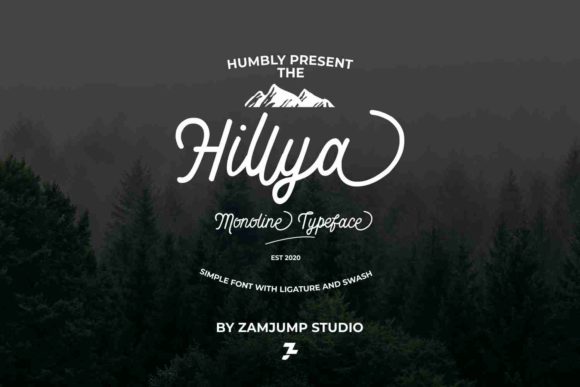
Hillya: The Casual Monoline Script Font for Modern Projects
Imagine a typeface that feels handwritten yet polished, casual but never messy. That’s Hillya. At its core, Hillya is a monoline script font, meaning every stroke maintains a consistent weight, creating a clean, flowing appearance. Its design draws inspiration from vintage typographies—think mid-century signage or classic journal entries—but it’s been refined for today’s digital and print landscape. The result is a font that looks natural and approachable, perfect for projects that need personality without sacrificing readability.
What makes Hillya particularly interesting is how its value shifts depending on who’s using it. A blogger might see it as a way to soften their website’s headers, while a clothing brand owner might view it as the cornerstone of their new logo’s identity. This flexibility is Hillya’s greatest strength; it’s not a font locked to one specific use, but a versatile tool adaptable to many creative visions.
Why Hillya Appeals to Different Creative Minds
For beginners diving into design, perhaps for a social media page or a personal project, simplicity is key. Hillya’s monoline structure makes it less intimidating than more ornate script fonts. It’s easy to apply, and because it reads clearly even at smaller sizes, there’s less risk of a design mistake. A hobbyist creating a poster for a community event can use Hillya for the title and instantly achieve a friendly, handcrafted look without needing advanced typographic knowledge.
Experienced designers and professionals, however, might evaluate Hillya through a different lens. They’ll appreciate its technical reliability—the consistent stroke weight means it renders well across various mediums, from fine print on a garment tag to a large-scale banner. Its vintage inspiration provides a nod to design history, which can add a layer of conceptual depth to a branding project. For a professional creating a logo for a craft brewery or an independent coffee shop, Hillya offers that sought-after blend of authenticity and modern usability.
Practical Applications Across Projects
Let’s look at some concrete examples. A small business owner, say someone launching a line of organic skincare products, needs packaging and labels that feel gentle and natural. Hillya on the product name can convey that ethos immediately. An educator designing a workshop handout might use Hillya for key quotes or section titles to make the material feel more engaging and personal, breaking away from the rigidness of standard academic fonts.
For creators and freelancers—illustrators, photographers, or writers building their online presence—Hillya can serve as a signature typographic element. Using it consistently in social media post graphics or watermarks on their work builds a recognizable visual thread. The font’s casual nature aligns well with creative industries where personality is part of the product.
Marketers and bloggers often prioritize engagement and readability. Hillya can be a strategic choice for call-out text or email newsletter headings, where a slight stylistic shift can draw the reader’s eye without being distracting. It’s important, however, to use it sparingly in long text blocks; its script nature is best reserved for emphasis and visual anchors.
Evaluating Hillya Against Your Own Priorities
When considering any font, your personal or professional priorities dictate its worth. If ease of use and speed are your main concerns, Hillya scores well. It integrates seamlessly into common design software and doesn’t require special handling. For those focused on quality and presentation, Hillya’s clean vector outlines and balanced letterforms ensure a professional output, whether viewed on a phone screen or printed on cotton paper.
Creativity and flexibility are where Hillya truly shines. It can be paired successfully with bold sans-serifs for a contemporary mix, or with simple serif fonts for a more classic combination. This makes it a long-term asset in a font library, useful for a wide range of future projects. Someone evaluating its commercial value, like an entrepreneur, needs to consider if the font’s personality matches their brand’s voice. Hillya’s vintage-casual vibe is ideal for brands that are artisanal, lifestyle-focused, or creative, but might not suit a highly technical or corporate entity.
Is Hillya the Right Choice for You?
Identifying whether Hillya matches your needs starts with your project’s tone and your own skill level. Ask yourself: Does my project benefit from a friendly, human touch? Am I looking for a font that’s distinctive but not overpowering? If you’re a beginner, does working with a clear, legible script feel manageable?
Also consider the medium. Hillya excels in applications like logos, posters, social media graphics, and clothing brand labels where its character can be fully appreciated. It’s less suited for long-body text or environments requiring utmost formal rigidity. For consumers simply appreciating design, encountering Hillya on a well-designed product or website adds a subtle layer of warmth and craftsmanship that can enhance the overall experience.
Ultimately, Hillya occupies a specific niche in the typographic world. It’s not the ultra-formal script of a wedding invitation, nor the wildly energetic brush font of a sports poster. It sits comfortably in between, offering a natural, accessible elegance. Whether you’re building a brand from scratch, adding polish to your creative work, or just seeking a reliable typographic tool for everyday design tasks, Hillya’s blend of vintage inspiration and modern clarity makes it a compelling option to explore.