The Unique Rhythm of Palm Belly: Modern Calligraphy Meets Digital Utility
The landscape of digital typography is vast, filled with typefaces that emulate classic printing, embody minimalist geometry, or strive for pure readability. Yet, within this spectrum exists a distinct category where artistry and function intentionally blur. Here, fonts are not merely vessels for words but active participants in shaping tone and emotion. The Palm Belly script font stands as a compelling example of this fusion, offering a design language that is at once beautifully casual and meticulously crafted for modern use.
A Closer Look at Casual Swashes and Consistent Flow
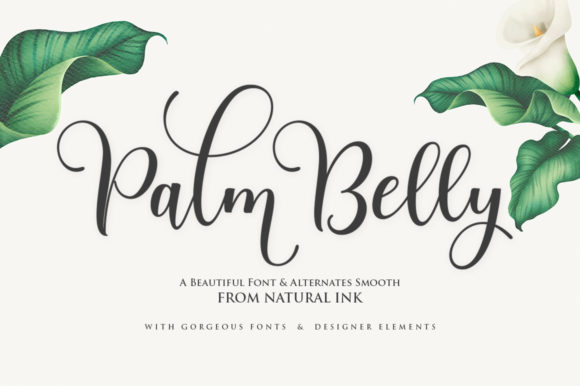
At its core, Palm Belly is a contemporary calligraphic script. Unlike formal, rigid scripts that demand precise alignment, it embraces a more relaxed, hand-written aesthetic. This is achieved through its characteristic casual swashes—the flowing extensions and decorative flourishes on certain letterforms. These swashes are not arbitrary; they are designed to integrate smoothly with the overall lettering, providing rhythm and visual interest without overwhelming the text.
Consider the lowercase ‘f’ or the uppercase ‘Q’ in many traditional scripts—they can be ornate and disconnected from the rest of the word. In Palm Belly, these elements are balanced. The swashes maintain a sense of spontaneity, reminiscent of skilled hand-lettering, while ensuring the word remains a cohesive unit. This balance is crucial for practical application, as it prevents the font from becoming illegible or overly distracting when used in longer text blocks or key headlines.
PUA Encoding: The Gateway to a Rich Glyph Collection
A defining technical feature that elevates Palm Belly from a beautiful design to a versatile tool is its PUA (Private Use Area) encoding. In font technology, the PUA is a reserved section of the Unicode standard where font designers can place extra characters, glyphs, and alternate forms that aren't part of the standard character set. For a user, this means the font contains an awesome selection of special characters—alternative letterforms, unique ligatures, additional swash variants, and decorative elements—that are readily accessible.
Without PUA encoding, these special glyphs might be locked away, requiring complex software or manual glyph substitution panels to use. Palm Belly’s PUA encoding simplifies this dramatically. Whether you are working in a common word processor, graphic design application, or web design tool that supports font features, you can access these alternate glyphs with ease. This empowers creators to customize their text, choosing a swashed ‘a’ or a stylized ‘&’ to perfectly suit the mood of their project, all without needing specialized typographic expertise.
Real-World Applications: Where Palm Belly Adds Character
The practical value of a font like Palm Belly lies in its ability to convey personality while maintaining digital functionality. Its applications are diverse, touching both commercial and personal creative spheres.
- Brand Identity for Lifestyle and Creative Businesses: For a boutique coffee shop, an independent jewelry designer, or a freelance photographer, brand materials need to feel authentic and approachable. Palm Belly’s modern calligraphy style can be used in logos, packaging quotes, and social media graphics to establish a warm, human-centric brand voice that stands apart from corporate austerity.
- Digital Content with a Personal Touch: Bloggers, educators, and content creators often seek to make their digital publications more engaging. Using Palm Belly for pull quotes, section headers, or featured titles within otherwise clean, readable articles can introduce visual pacing and a subtle, friendly authority to the content.
- Event and Personal Stationery: Invitations, wedding announcements, and celebratory certificates are traditional domains of calligraphy. Palm Belly brings this elegance into digital creation, allowing for beautifully rendered text that can be printed or shared digitally, often with more layout flexibility and efficiency than manual lettering.
- Product UI Elements for Niche Applications: While not suitable for dense body text in user interfaces, Palm Belly’s character set can be effective in specific UI contexts for apps targeting creative communities—such as a titling font in a music composition tool or a branding font in a craft marketplace app—where the interface itself wants to express creativity.
Advantages and Considerations for Users
Choosing a font is always a balance of benefits and constraints. For those considering Palm Belly, several advantages are clear.
Its primary benefit is expressive versatility. The combination of its core casual style and the extensive PUA-encoded glyph library means a single font file offers numerous stylistic outcomes. A designer can create a headline with bold swashes for impact and, in the same project, use a more subdued alternate character set for supplementary text, maintaining harmony without needing multiple font licenses.
Furthermore, the ease of access to its special characters lowers the technical barrier. Hobbyists creating a single wedding invitation or small business owners designing their own flyers can achieve professional, customized typography without deep software knowledge. This democratizes a level of design detail previously reserved for experts.
Practical Considerations for Implementation
As with any distinctive script font, successful use requires mindful application. Readability remains paramount. Palm Belly is excellent for headlines, short phrases, titles, and decorative text, but it should not be used for long paragraphs or small-size body text, where its swashes and cursive joins can reduce reading speed and clarity.
Another consideration is context. Its modern calligraphy feel is inherently specific. It may not align with the tone of a technical report, a financial document, or a minimalist tech brand seeking a stark, neutral image. Understanding the emotional resonance of the font—casual, artistic, friendly, elegant—is key to matching it with the right project.
Finally, while PUA encoding provides access, users should verify that their specific software supports these features. Most modern design applications like Adobe Creative Suite, Affinity products, and even advanced word processors do, but checking ensures the workflow will be smooth.
The Broader Trend: Expressive Typography in the Digital Age
Palm Belly is not an isolated phenomenon; it represents a wider movement in typography. As digital tools become more sophisticated and audiences crave more authentic, personalized visual communication, fonts that bridge the gap between handmade artistry and digital precision are increasingly valuable. They satisfy a desire for uniqueness in a world of standardized templates.
This trend speaks to diverse users: the business owner building a distinctive brand, the educator making learning materials more captivating, the hobbyist pursuing a personal project with polish, and the professional designer seeking a reliable, richly-featured tool for client work. For all of them, a font like Palm Belly offers a ready-made vocabulary of style.
In essence, Palm Belly Script Font demonstrates that utility in typography is not solely about stark efficiency. Utility can also be the capacity to imbue text with a specific feeling—a casual elegance, a friendly gesture, a creative spark—and to provide the technical means to do so reliably across digital platforms. By understanding its characteristics, from its beautiful swashes to its thoughtfully implemented PUA encoding, creators can harness this tool to add a unique, human rhythm to their digital words.