Integrating Montagna: A Modern Font for Cohesive Creative Workflows
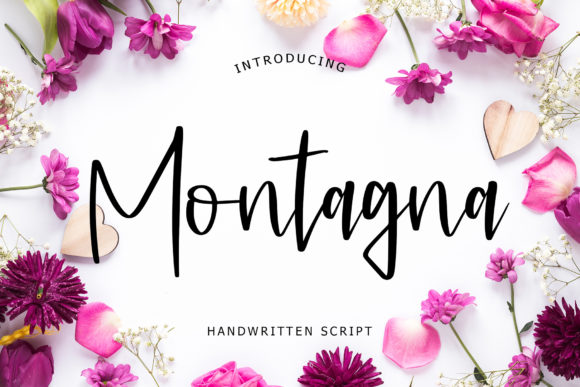
In the landscape of digital design, typography often serves as the quiet anchor of a project’s identity. A font choice is rarely an isolated aesthetic decision; it is a foundational step that influences every subsequent stage of creation, from initial mockups to final delivery. For professionals and creators seeking a font that can carry a concept from ideation to execution with both distinction and flexibility, Montagna presents a compelling solution. This modern script font, characterized by its geometric lines and dynamic swashes, is more than just a typeface—it is a versatile asset designed to integrate seamlessly into structured creative and branding workflows.
Establishing Visual Identity Early in the Planning Phase
The most effective use of any design resource begins with strategic placement within your process. Montagna is particularly powerful when adopted during the early planning and identity-definition stages of a project. Before you begin sketching logos, drafting social media templates, or designing product packaging, establishing your core typographic palette is crucial. Introducing Montagna at this point allows its personality to inform the entire visual language.
Consider a branding project for a boutique business. The discovery phase often involves mood boards, keyword association, and competitor analysis. Here, Montagna’s blend of geometric precision (through its core letterforms) and elegant flourish (via its swashes) can be evaluated against the desired brand attributes—is it modern yet artisan, structured yet expressive? By testing Montagna in early conceptual layouts alongside color swatches and imagery, you assess its compatibility and emotional resonance. This prevents the common workflow pitfall of trying to retrofit a font into a nearly complete design, which often leads to disjointed visuals.
This font’s inherent versatility means one asset can serve multiple planning documents. You might use Montagna for the headline on your internal brand guideline draft, the invitations for a client presentation, and the mockups for the proposed product labels. This creates a consistent thread through all preparatory materials, reinforcing the identity even before it is publicly launched. For freelancers and small business owners managing their own branding, this consistency from the outset simplifies decision-making and reduces revisions later.
Montagna in Active Execution: From Digital to Physical
Once planning solidifies into active creation, Montagna’s design supports execution across a remarkably broad spectrum of deliverables. Its utility lies in its ability to interact harmoniously with other design elements and production methods.
Digital and Social Media Applications
In digital environments, readability and impact are paramount. For social media posts or website advertisements, Montagna’s clean geometric baseline ensures legibility even at smaller sizes, while its optional swashes offer a tool for emphasis. You might use the standard font for a post’s main message, and employ a swash variation on a single key word to draw the eye, a technique that enhances engagement without requiring complex animation or additional graphics. This interplay between the font’s two modes—minimalist and decorative—allows designers to create hierarchy and interest using a single, cohesive type family, streamlining the asset management process.
Print and Physical Product Integration
Transitioning to physical media, such as product packaging, T-shirt designs, or wedding stationery, introduces considerations of scale, material, and printing technique. Montagna’s well-defined lines and open counters (the enclosed spaces in letters like ‘o’ or ‘e’) make it robust for various printing methods, from digital transfer to silk screening. When preparing files for a T-shirt, a designer can rely on the font’s geometry to create crisp edges that print cleanly. For a wedding invitation suite—perhaps pairing an invitation, envelope, and program—using Montagna for the couple’s names and headers creates a tactile, elegant thread across all pieces. The key is to prepare your artwork with an awareness of final output: ensuring stroke weights are sufficient for the chosen print method and that intricate swashes are used where detail will be preserved.
In these phases, Montagna interacts directly with other tools. Your workflow might involve creating vector paths from Montagna’s letterforms in Illustrator for precise scaling, then importing those assets into a packaging template in InDesign, or applying the font directly to a mockup in a shirt-design plugin. Its compatibility with standard design software ensures it doesn’t become a workflow bottleneck.
Workflow Tips for Long-Term Consistency and Organization
For ongoing projects or businesses that maintain a brand over time, a font must support not just a single launch but sustained, consistent application. Integrating Montagna into your long-term system requires some practical organizational steps.
First, formalize its usage. If Montagna is your primary display font, document its specific applications in your brand guidelines. Specify which weights or swash styles correspond to which contexts (e.g., “Use the standard weight for all body text on social graphics; use the swash variant only for headline emphasis on blog banners”). This prevents arbitrary use and maintains visual coherence across different team members or projects over months or years.
Second, build a reusable asset library. Create template files for common outputs—a social media post template in Canva or Photoshop, a product label layout in Illustrator, a stationery set in InDesign—with Montagna properly set as the styled text. This dramatically increases efficiency for recurring tasks like weekly social posts or new product launches. For educators or bloggers, having a pre-formatted header template for course materials or article titles ensures every new publication aligns instantly with your established look.
Third, consider file management. If you are using Montagna across a suite of projects, keep a master folder of approved font files (including any licensing documentation) accessible to your team or your own different devices. This avoids the common issue of collaborators substituting fonts or encountering missing font warnings, which disrupts quality control.
Adapting Montagna to Mixed-Media Campaigns
Modern projects often span multiple media formats. A marketing campaign might include digital advertisements, physical product packaging, event signage, and promotional merchandise. Here, Montagna’s strength is its ability to bridge these formats without losing identity. A workflow for such a campaign would involve using Montagna as the typographic constant across all deliverable designs.
Start by creating the core campaign slogan or key visual with Montagna in your primary design file. Then, adapt that core asset for each format. For the digital ad, you might optimize the font size and color for web viewing. For the packaging, you would adjust the layout to fit the label shape and confirm the color matches the physical printer’s palette. For the T-shirt, you might simplify the design to a single-color version of the Montagna text. This adaptation process is guided by the font’s inherent flexibility, but requires a mindful approach to ensure the essence of the typeface remains recognizable in every context. The outcome is a campaign that feels unified, because the typographic voice—established by Montagna—is consistent.
Conclusion: A Tool for Streamlined Creativity
Ultimately, the value of a resource like the Montagna font is measured by how smoothly it fits into the creator’s entire process, from initial spark to final touchpoint. Its design, with geometric lines providing stability and swashes offering curated flair, makes it adaptable to both the rigorous needs of branding and the expressive demands of wedding designs or personal projects. By intentionally integrating Montagna during planning, leveraging its dual nature during execution, and organizing its use for long-term consistency, professionals and hobbyists can elevate their visual output without complicating their workflow. It becomes not just a font you use, but a dependable component of your creative system, ensuring that the quality and character of your typography supports every step of your project’s journey.