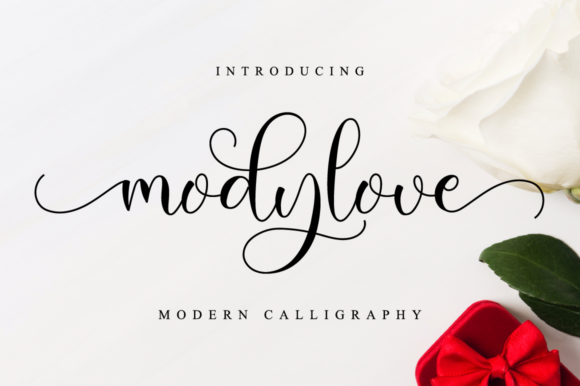
The Mody Love Font: A Practical Guide to Integration in Creative Workflows
In the landscape of digital design, fonts are not just decorative elements; they are functional tools that serve specific purposes within a project's lifecycle. Mody Love is an enchanting handwritten font that occupies a unique niche within this toolkit. Its versatility, ranging from greeting cards to headlines, makes it a strategic asset rather than a mere stylistic choice. Understanding how to integrate Mody Love effectively into your process—from planning to final execution—can significantly enhance the emotional impact and cohesion of your work.
Defining Your Project's Needs and Selecting Mody Love
The decision to use a specific font like Mody Love should ideally occur during the initial planning phase of a project. This is where you define the tone, audience, and desired outcome. Mody Love, with its inherent romantic feel, is not a universal solution; it is a targeted one. For instance, when planning a wedding invitation suite, a boutique bakery's branding, or a heartfelt blog series, the font's characteristics directly align with the project's emotional goals. Here, Mody Love interacts with other initial decisions such as color palette, imagery style, and overall layout. Selecting it early allows you to build the rest of your visual assets around its distinct personality, ensuring consistency from the outset.
Technical Preparation and Asset Compatibility
Before diving into design applications, a crucial practical step is understanding the technical features of Mody Love. Its PUA encoding is a key factor for seamless integration. This means all the beautiful glyphs and swashes are easily accessible within standard design software like Adobe Illustrator, Photoshop, or Canva, without requiring complicated coding or special plugins. For professionals and hobbyists alike, this translates to immediate usability. Preparing your workflow involves simply installing the font as you would any other, but with the confidence that the full stylistic range is at your fingertips. This compatibility reduces friction during the execution phase and prevents last-minute compromises when a specific swash is needed.
Implementation in Core Design Workflows
Once integrated into your software, Mody Love becomes an active component in the execution stage of your project. Its application is not monolithic; it varies based on the project's scale and nature.
For large-scale branding projects, Mody Love might be reserved for specific touchpoints. A café owner, for instance, could use it for the logo's secondary tagline, special event posters, and the headers on menu inserts, while employing a more neutral font for body text. This controlled use maintains the romantic feel without sacrificing readability across all materials.
In digital content creation, such as for bloggers or educators producing PDF guides or social media graphics, Mody Love can serve as a powerful accent. Using it consistently for headline graphics across a series of posts creates a recognizable and emotionally resonant visual signature. The workflow here involves creating a template in your design tool with Mody Love preset for headlines, streamlining the production of each new asset.
For personal and small-scale projects like crafting greeting cards or custom gift labels, Mody Love can be the dominant font. The process is more fluid: you design the entire piece around its handwritten aesthetic, perhaps pairing it with simple line drawings or soft watercolor textures. The font's versatility ensures it scales beautifully from a small tag to a large card front.
Interplay with Other Design Elements and Quality Control
A critical part of the implementation process is managing how Mody Love interacts with other elements. Its handwritten style naturally pairs well with organic textures, muted color schemes, and illustrative elements. A practical tip is to create a small mood board or style sheet early on that includes samples of Mody Love alongside your chosen colors and images. This serves as a reference throughout the project, aiding in quality control and ensuring visual harmony.
Conversely, it may clash with stark, geometric layouts or overly formal imagery. Recognizing this during the planning phase prevents disjointed final products. For efficiency, establish rules: for example, "Mody Love will only be used at sizes above 24pt for optimal clarity," or "Swash characters will be used only on the first and last letters of a headline." These simple guidelines speed up decision-making during busy design sessions.
Long-Term Integration for Consistency and Brand Memory
For entrepreneurs, marketers, and small business owners, a font choice like Mody Love can play a role beyond a single project; it can become part of a long-term brand identity. Consistent use across multiple touchpoints—your website's banner headlines, your product packaging's accent text, your holiday email campaigns—builds brand memory and emotional association with your audience.
Integrating it into your ongoing workflow requires organization. Maintain a digital brand kit that includes Mody Love as an approved font, along with examples of its sanctioned uses. When onboarding new team members or freelancers, this asset kit ensures everyone applies the font correctly, preserving brand consistency. This systematic approach turns a creative choice into a reliable, repeatable component of your business operations.
Practical Tips for Varied Applications
- Greeting Cards & Stationery: Use Mody Love for the main sentiment. Print a test sheet to check ink bleed on physical paper, as delicate swashes may need slight size adjustment.
- Social Media Graphics: Combine Mody Love headlines with solid background blocks for maximum legibility on small screens. Save your layered file as a template to reuse.
- Website Accents: Implement Mody Love via CSS for specific H2 or H3 tags. Ensure you have the web font license and test rendering across browsers.
- Presentation Slides: Use Mody Love sparingly on title slides or closing quotes to set a tone, but rely on simpler fonts for body text to maintain focus.
Beyond Romance: Contextual and Unexpected Uses
While the romantic feel of Mody Love is its signature, its handwritten authenticity can serve other contexts in a thoughtful workflow. An educator might use it to create warm, welcoming titles for learning materials aimed at young children. A productivity-minded blogger could employ it in the headers of personal reflection journal templates, suggesting a hand-crafted, intimate feel. The key is to let the project's core emotion guide the use. If the desired outcome is intimacy, authenticity, or personal touch, Mody Love can be a fitting tool, even if the project isn't overtly "romantic."
Ultimately, Mody Love is more than a font; it is a design resource that requires thoughtful placement within your process. From its selection in the planning phase, grounded in your project's goals, to its technical preparation leveraging PUA encoding, through its varied implementation in different media, and finally to its potential role in long-term brand consistency—each step involves a practical decision. By viewing it as an integral part of your workflow, rather than a last-minute decorative addition, you harness its full potential to elevate the emotional resonance and professional polish of your creative output.